


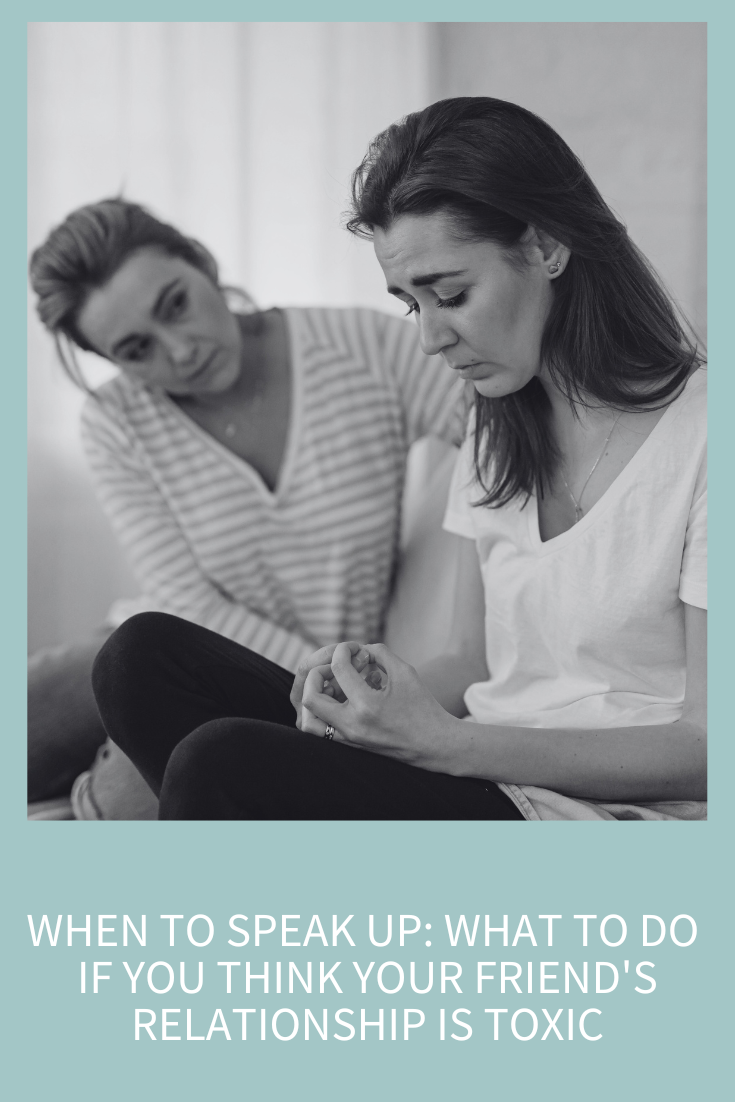
You’re sitting across from your friend, watching them light up when their partner texts, and your stomach turns. Something feels off. You’ve seen the controlling behavior, the subtle put-downs, the “jokes” that aren’t really funny. You love your friend, and you’re worried. But what do you do with that? Do you say something and risk the friendship? Or do you stay quiet and hope they figure it out on their own?
This is one of the most emotionally loaded relationship dilemmas you’ll ever face. And it’s not just about toxic partners, it’s about what it means to be a real friend when the stakes feel high and the lines get blurry.
Today, we’re breaking it all down: how to know if you should speak up, what to say (and what not to say), and how to hold boundaries if your friend stays in the relationship. Because yes, they might stay. And you need to know how to handle that without sacrificing your sanity or the connection you’re trying to protect.
7-minute read
Why It’s So Hard to Say Something
Let’s start with the obvious: speaking up can feel like a trap. If you stay silent, you feel complicit. But if you speak up, you risk alienating your friend and losing the relationship entirely.
From a psychological standpoint, this makes perfect sense. We’re wired to fear conflict because, evolutionarily, being kicked out of the tribe could be fatal. So we avoid confrontation like it’s a saber-toothed tiger. Your brain literally interprets it as danger.
On top of that, if you’ve ever been in a toxic relationship yourself, your own unhealed wounds might get stirred up. That inner part of you that wasn’t believed or protected is now desperate to protect your friend. It’s noble, but also something to slow down and look at.
That’s why the first step in any of this is checking in with yourself.
Red Flag or Personal Trigger? How to Tell the Difference
Before you step into this emotional fire, get clear: are you reacting to something truly harmful, or to your own discomfort?
Ask yourself:
- Am I seeing specific, concerning behaviors?
Examples: “He tracks her location,” “She yells at him in front of the kids,” “They’ve lost touch with all their friends.” - Or am I reacting to preferences, lifestyle differences, or values that don’t align with mine?
Examples: “He doesn’t have a real job,” “They argue a lot,” “She’s really intense about parenting.”
You’re always seeing the world through your Reticular Activating System (RAS), the brain’s filter for what you believe to be true. If you’re primed to see abuse or dysfunction because of your own past, your RAS will confirm it, even when the situation may be more nuanced.
So yes, your instincts matter. But gut feelings aren’t gospel. Pause, check your bias, and ground yourself before you speak.
Why They Probably Can’t Hear You (Yet)
You’ve done your gut check and you’re still deeply concerned. Now what? Before you talk to your friend, it’s crucial to understand how their nervous system might react. If someone is in a trauma-bonded or codependent relationship, they’re not going to process your words through a calm, rational lens.
They may be emotionally dependent on this relationship, even if it’s harmful. Their brain might be linking this partner to love, safety, or identity. If you challenge that bond, their nervous system interprets it as a threat, not support.
The result? Defensiveness. Denial. Anger. Withdrawal. None of which means you did anything wrong, but it does mean you need to approach this conversation carefully.
How to Say Something Without Destroying the Friendship
This is not the time to come in hot with accusations or diagnoses. Your friend doesn’t need a psychological profile of their partner; they need care, clarity, and nonjudgmental support.
Here’s my four-step framework to help you speak up with love:
- Start with permission. “Can I share something that’s been on my mind? I’m only bringing it up because I care about you, and I want to check that it’s OK to say something.”
- Make it about you, not them or their partner. “I’ve noticed I feel anxious sometimes when I see how he talks to you in front of other people. That might just be me being sensitive, but I wanted to say something instead of pretending I’m not worried.”
- Name the behavior, not the person. Avoid saying “He’s abusive” or “She’s manipulative.” Instead, say: “I noticed when she made that comment about your weight in front of everyone. You didn’t seem OK, and I didn’t know how to respond.”
- Avoid pressure, and leave the door open. “You know your relationship better than I ever could. I could be wrong, I just wanted to check in because I love you.”
You’re not here to “rescue” or change them. You’re here to plant a seed.
What If They Stay?
Let’s talk about the part no one wants to say out loud: your friend might stay. In fact, they probably will, at least for a while. This is where things get complicated. Because now, you’ve said your truth… and they’ve made a choice you don’t agree with. So what do you do?
First, let go of the fantasy that speaking up automatically creates change. That’s a form of control. When you attach your worth or your peace to someone else’s choices, you’re setting yourself up for pain.
This is where boundaries become your lifeline.
Boundaries Are the Bridge, Not the Wall
A boundary isn’t about shutting someone out. It’s about protecting your peace while staying in relationship.
Here’s what healthy boundaries can sound like:
- “I want to stay close to you, but I’m finding it hard when I see patterns that make me feel worried. I’ll always be here for you, but I may need to limit time around both of you for my own well-being.”
- “I love you. And I trust you to make your own choices, even when they’re different than what I’d choose.”
- “If you ever want to talk, I’m here. No judgment.”
These aren’t ultimatums. They’re loving, clear, and grounded in reality.
How to Stay Connected Without Feeling Complicit
If your friend stays in the relationship, things may feel awkward or strained. Here’s how to manage the discomfort:
- Reaffirm your care. Say, “I know I shared some concerns, but I love you and I’m here for you. Always.”
- Don’t fake approval. You don’t have to co-sign their choices. You just have to stay kind.
- Redirect venting. If they come to you with the same complaints again and again, try: “I want to be a safe space, but talking about this over and over isn’t helping either of us. I’m going to urge you to go to therapy and discuss this with a professional.”
Staying connected without enabling dysfunction is a delicate dance. You’ll need to check in with yourself often and adjust as needed. You can love someone and still say, I can’t keep having this same conversation.
If You’re Struggling, You’re Not Alone
If you’ve been carrying this quiet heartbreak, watching someone you love lose themselves in a relationship that worries you, I see you. It’s one of the hardest emotional knots to untangle.
You’re trying to be loving. You’re trying to stay close. And you’re trying not to betray your own instincts in the process.
You’re not supposed to have all the answers. But you are allowed to speak your truth. Say it with kindness. Say it without attachment. And say it knowing that love, real, grounded, grown-up love, isn’t about control. It’s about consistency and care, even when the outcome isn’t what you hoped for.
Free Download: What to Say When You’re Worried
If this conversation hits close to home, I’ve created something just for you.
What to Say When You’re Worried: 10 Loving Scripts to Use When a Friend’s Relationship Looks Toxic. It’s a one-page guide packed with nonjudgmental, heart-centered phrases you can use in real conversations—with example openers, boundary statements, and gentle redirects that help you stay loving and clear.
If this is an area where you want more help, you can get this week’s Therapy-to-Go Bundle for just $10. Every episode’s Therapy-to-Go bundle is included for my online Substack community, The One Love Collective, for just $8 per month.
One Love Collective/Therapy-to-Go Bundle
- What to Say When You’re Worried: 10 Loving Scripts to Use When a Friend’s Relationship Looks Toxic
- A Boundary Clarity Map for When a Friend Stays in a Toxic Relationship
- Talking About the Hard Stuff: 8 Deep-Dive Discussion Questions for Friendship Circles and Real-Life Reflection Pods
- 15 Journaling Prompts to Check Your Intentions Before Speaking Up
- 10 Mindset Reframes for Detaching with Grace
- A Conversation Planning Worksheet for Speaking Hard Truths Without Regret
- They Stayed. Now What? A Self-Compassion Checklist for Maintaining the Relationship (Without Losing Your Mind)
Buy the bundle now for $10 and get all the above. OR join Abby’s One Love Collective and get a Therapy-to-Go Bundle for each episode, plus ad-free episodes of the podcast, live Q&A’s with Dr. Abby, and access to an amazing community that’s all about real growth.