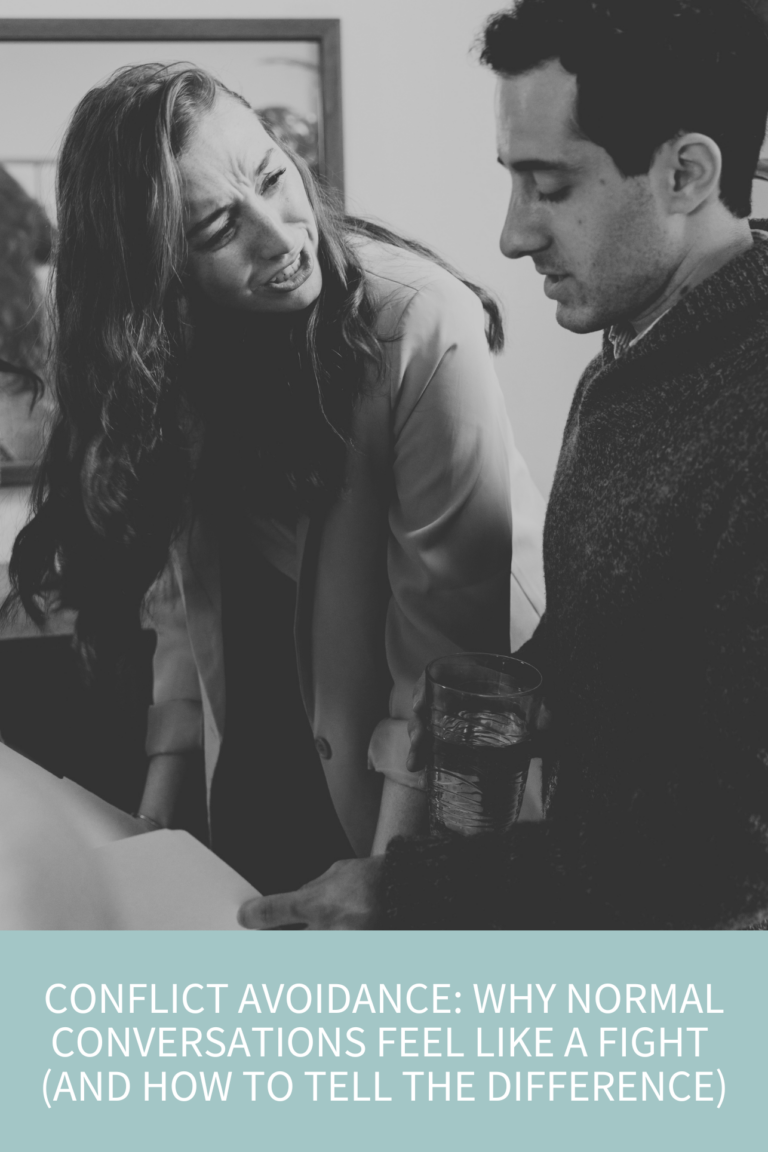


You’ve probably been there. You vent about a rude coworker, a passive-aggressive family member, or a friend who crossed a line, and your partner responds with:
- “Well, maybe they didn’t mean it that way.”
- “You might be being too sensitive.”
- “You should just let it go.”
It feels like betrayal. Instead of having your back, your partner seems to take the other person’s side. You walk away feeling dismissed, frustrated, and alone. This isn’t a small thing. This is a trust issue.
When your partner continually defends others, jumps to fix your feelings, or minimizes your pain, it undermines the emotional safety in your relationship. You start to wonder, “Are you on my side or not?” This is more than just annoying behavior. It creates resentment, emotional disconnection, and erodes trust. Today, we’re diving into why this happens, why it hurts so much, and what you can do about it.
8-minute read
First, Let’s Be Clear: Validation is Not Agreement
This entire dynamic falls apart when people confuse validation with agreement. Validation means saying, “I understand how you feel.” It doesn’t mean, “I agree with your assessment of what happened.”
When your partner skips over that validation, it sends the message that your feelings don’t, even if that is not their intention.
Why Your Partner Takes Other People’s Side
Obviously, your own situation is unique in some ways. But I can say (with my over 35 years of experience) that there are six key reasons I see most commonly to explain why this happens.
- Discomfort with “Negative” Emotions: Many people are deeply uncomfortable with emotions, especially what they see as “negative” ones. Research shows that men, in particular, are socialized to suppress emotions and focus on solutions rather than feelings. This creates a learned discomfort with emotional expression, especially when those emotions seem messy or hard to fix.
- Problem-Solving Reflex Instead of Emotional Support: Research shows that the brain often defaults to problem-solving when it encounters distress. This pattern is more common in those with more analytical cognitive styles, sometimes linked to higher systemizing brain patterns (generally found in men, but women experience this too). The problem, of course, is that relationships aren’t engineering problems. They’re living, breathing experiences.
- Conflict Avoidance and Anxiety: For some partners, your upset triggers their own anxiety. Instead of sitting with the discomfort, they try to neutralize the situation by minimizing your feelings or explaining away the issue. This is a self-soothing behavior, not a you-soothing one.
- Poor Emotional Modeling Growing Up: If your partner grew up in a family where emotions were dismissed, mocked, or ignored, they likely never learned how to offer emotional validation. This isn’t because they don’t care. It’s because no one ever taught them how.
- Power Struggles and Control: This one flies under the radar but is often at play. The research shows that sometimes, a partner will invalidate your feelings or take other people’s sides as a way to assert control or dominance in the relationship. This behavior is rooted in low self-esteem or insecurity. It often comes from growing up in families where power struggles were modeled instead of collaboration. The underlying message becomes, “I’m the rational one here. You’re the irrational one.” This dynamic keeps one partner feeling small and the other feeling superior, whether consciously or not.
- They Think They’re Being Helpful: Many people genuinely believe that offering advice, reframing the situation, or defending the other person is helpful. They don’t realize that it leaves you feeling emotionally abandoned.
Why It Hurts: The Neuroscience of Feeling Unsupported
This isn’t just about feelings. This is about your nervous system. Humans are biologically wired for connection. Our nervous systems regulate best when we feel safe, seen, and connected to others. This is called co-regulation. When someone validates us, our nervous system shifts from fight-or-flight to safety and calm.
When your partner invalidates your feelings, whether that’s by jumping into giving advice, defending the other person, or minimizing your feelings, it sends a signal to your nervous system that you’re not safe and not connected. Your brain interprets that as a threat. So, your body releases stress hormones like cortisol and adrenaline, your heart rate increases, and blood flows away from parts of the brain responsible for higher reasoning and toward survival responses.
This is why it feels so awful. You’re not just “being sensitive.” You’re responding to a real, biological signal that your emotional safety has been compromised.
This Is Actually About Trust: The Real Breakdown
Most people think about trust in relationships as a simple yes or no. You either trust someone or you don’t. But that’s not how trust actually works.
I’ve talked about something I call the Trust Triad before in previous episodes, but let me do a quick recap here.
Trust has three pillars:
- Integrity: Is my partner honest? Do they tell the truth?
- Competence: Does my partner do what they say they’ll do? Can I rely on them?
- Goodwill: Does my partner have my back? Do I feel like they’re emotionally invested in my well-being?
When your partner repeatedly takes other people’s sides, it’s the goodwill pillar of trust that starts to crack.
You might still trust them not to cheat. You might trust them to handle finances or take care of the house. But you stop trusting them to be emotionally safe. You stop trusting that they’re on your team.
And that’s the real relationship injury.
When the goodwill pillar breaks, you start thinking:
- “Why should I share how I feel if it’s just going to get dismissed?”
- “I have to handle everything alone.”
- “I can’t count on you when it really matters.”
This is where resentment grows and disconnection blossoms. And if left unchecked, the relationship becomes a hollow shell of what it once was.
Common Signs This Is Happening in Your Relationship
- You feel like your partner doesn’t have your back.
- You walk away from conversations feeling worse, not better.
- You stop sharing vulnerable feelings because it feels pointless.
- You start turning to other people for emotional support.
- Your resentment is growing faster than your connection.
What To Do About It: My Five-Step Framework
Step 1: Name the Pattern Out Loud
You’re going to need to say something, without blame, but as a “sharing of the facts”. So, you might say something like, “When I share that something upset me, and you start explaining the other person’s side or telling me what to do, I feel alone. It feels like you’re not on my team.” “While I appreciate that you’re trying to help, that doesn’t work for me and I end up feeling angry with you which, of course, I don’t want to feel.”
Step 2. Teach the Difference Between Validation and Agreement
This is a big piece. Your partner is likely feeling that they don’t agree that you should be upset, or maybe don’t even agree that the other person is in the wrong at all. So, you can say something like, “Saying ‘I can see how upset you are’ or ‘It’s hard to see you so upset,’ isn’t the same as saying you agree with everything I’m saying. It just tells me you care about how I feel.”
Step 3. Be Crystal Clear About What You Need
Now you want to be very clear about what you’re looking for. So you might say something like:
- “I need you to just listen and help me feel seen before we try to figure out any solutions.”
- “Are you in a space where you can just hear me right now?”
My truly favorite way to deal with these situations (if it works) is to pre-empt an unwanted response by setting the conversation up for success. So, you might say, “I want to talk to you about something that happened at work today, but I’m looking only for comfort, not solutions right now.”
Step 4: Invite a New Way to Respond
Now that you’ve shared what doesn’t work for you and what you do need, offer a new script or structure they can try, if they’re open. This isn’t about controlling their behavior; it’s about inviting collaboration.
You might say:
- “Would it help if I gave you an example of what kind of support I’m looking for in moments like this?”
- “I don’t need you to say these exact words, but something like: ‘That sounds so frustrating. I’m really sorry you had to deal with that’ would go a long way.”
- “When I’m venting, something like, ‘Ugh, that sucks. Do you want to talk about it more or just hang out and forget it for now?’ would help me feel like we’re in this together.”
- “Even just saying, ‘I’m here, keep going,’ makes me feel supported without needing a fix-it response.”
Each of these examples keeps the energy on connection over correction, which is the whole darn point. This is a co-creation moment, not a command. You’re helping them succeed at being there for you by showing them what that actually looks like.
Step 5. Check for Power Struggles
Now it’s time to check for any power struggles (remember all those reasons I mentioned earlier about why your partner might not be supporting you). So now you might ask yourself:
- “Is my partner trying to be ‘right’ more than they’re trying to connect?”
- “Do they downplay my feelings to feel more in control?”
If the answer is yes, this is a deeper dynamic that needs to be addressed, whether through open conversation, setting stronger boundaries, or couples therapy.
Wrap Up
This isn’t about being dramatic or needy. This is about your basic human need for emotional safety. When your partner (or anyone really) doesn’t validate your feelings and constantly sides with others, it hurts because it breaks trust. You stop believing that they have your back.
The good news? This is fixable. Most people simply don’t understand how important validation is or how to give it. But with the right tools and open conversations, you can shift this pattern and rebuild not just connection, but real trust.
Therapy-to-Go Bundle
- Building Connection Instead of Power Struggles: Self-Assessment Checklist
- Conversation Starters for Rebuilding Goodwill and Emotional Safety
- The Emotional Support Quick Reference Guide
- Journaling Prompts
- Power Struggle Patterns: Self-Assessment Checklist
- Reflection Worksheet: How to Ask for What You Need Without Getting Defensive (or Starting a Fight)
- Repair Scripts: What to Say When You’re the One Who Messed Up
- The Trust Triad Inventory: Where’s the Crack?
Buy the bundle now for $10 and get all the above. OR join Abby’s One Love Collective and get a Therapy-to-Go Bundle for each episode, plus ad-free episodes of the podcast, live Q&A’s with Dr. Abby, and access to an amazing community that’s all about real growth.
Resources for When Your Partner Takes Other People’s Side (And What to Do About It)
Join Abby’s One Love Collective on Substack!
Buy the bundle for this episode
Overcoming Insecurity and Silencing Your Inner Critic