


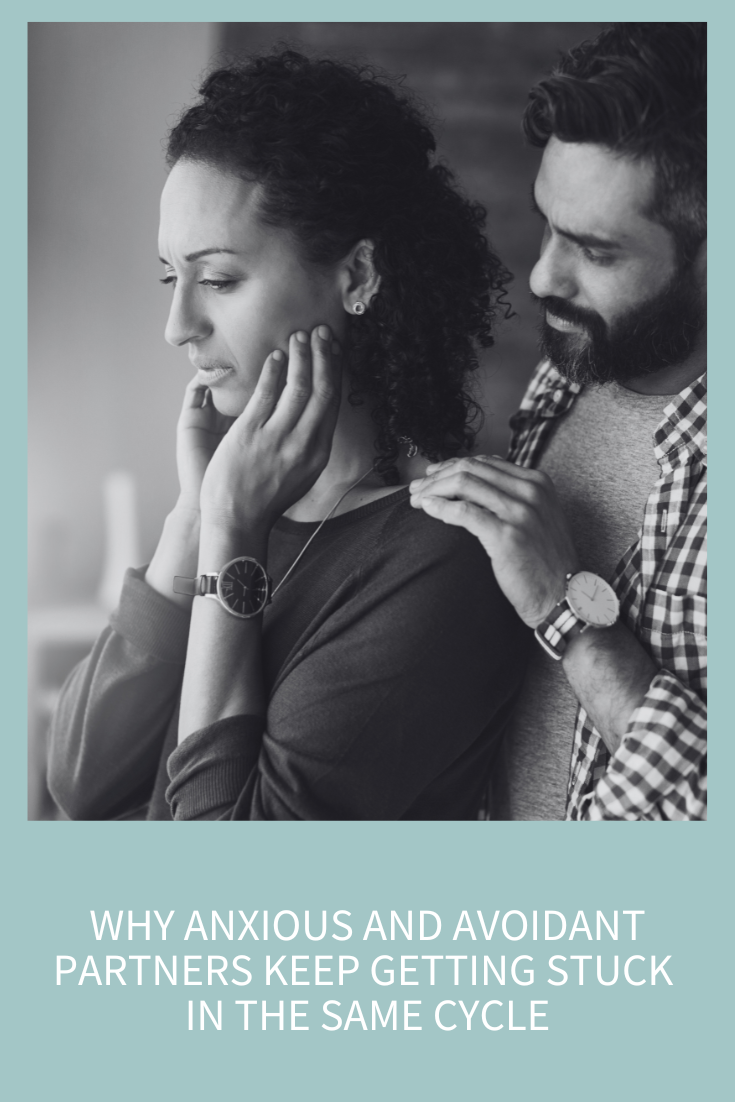
If you’ve ever been in a romantic relationship where one of you keeps reaching for closeness while the other pulls away just when things feel important, this episode is for you. If part of you feels like you’re always chasing connection, or part of you feels like too much closeness makes you want to escape, you’re not broken. You’re likely in an anxious-avoidant dynamic. Anxious and avoidant partners don’t randomly fall in love. This pairing is common for very specific psychological and nervous system reasons. Today I want to help you understand that pattern so you can stop personalizing what’s happening and start seeing it clearly. This is Part One of a three-part series. Today is about naming the dynamic. The next two episodes will focus on how to love an anxious partner and how to love an avoidant partner without losing yourself.
8-minute read
Introduction
Anxious-avoidant relationships often begin with intensity and hope and slowly dissolve into confusion. One partner feels like they’re doing most of the emotional work. The other feels like they’re constantly being asked for something they don’t know how to give. Both people feel misunderstood. Both feel hurt. And both often still love each other.
You might find yourself thinking:
- Why do I always care more?
- Why does closeness suddenly feel like pressure?
- Why do we keep having the same argument in different clothes?
This isn’t about effort or compatibility. It’s about attachment and how your nervous systems learned to survive closeness. Once you understand that, the story changes.
A Grounded Refresher on Attachment Styles
I’ve done quite a few episodes already on attachment styles, but let’s do a quick refresher here so we’re all on the same page. Attachment theory explains how you learned to experience closeness, emotional safety, and connection based on early caregiving relationships. These patterns aren’t just psychological. They’re physiological. They show up most strongly in romantic relationships because intimacy activates your deepest wiring. In adulthood, attachment is typically described using four broad styles.
1. Secure attachment
Secure attachment means you’re generally comfortable with closeness and independence. You can ask for what you need without fearing abandonment, and you can handle space without assuming rejection. Conflict feels uncomfortable, but it doesn’t feel catastrophic. Then there are three main insecure attachment styles, which I’ll talk about next.
2. Anxious Attachment
Anxious attachment develops when closeness was inconsistent or unpredictable. Your nervous system learned that connection matters deeply, but it might disappear. As an adult, this often shows up as heightened sensitivity to changes in tone, timing, or emotional availability. Your body reacts first, your mind second.
3. Avoidant Attachment
Avoidant attachment develops when closeness felt overwhelming, intrusive, or emotionally unsafe early on. Your nervous system learned that independence equals safety. As an adult, emotional intensity can feel draining or destabilizing even when you care deeply.
4. Disorganized for Fearful Avoidant Attachment
Disorganized or fearful avoidant attachment involves both craving closeness and fearing it. This pattern is more strongly associated with early trauma or unpredictable caregiving. We’re naming it here for completeness, but this episode focuses specifically on the anxious-avoidant dynamic.
Why Anxious and Avoidant People Find Each Other
The anxious-avoidant pairing is extremely common. Research consistently shows anxious and avoidant partners are more likely to pair together than chance alone would predict. There isn’t one reason for this. There are several (I’m going to give you my top five right now), and together they form a powerful pull.
1. Familiarity Feels Like Chemistry
Your nervous system is drawn to what it recognizes, not what’s healthy. If you learned early that love required effort, pursuit, or vigilance, emotional distance can feel familiar. If you learned early that closeness came with pressure or responsibility, emotional intensity can feel threatening. That recognition often shows up as chemistry. It feels alive, charged, and compelling because your system knows the terrain.
2. Each Person Temporarily Regulates the Other
Early on, anxious partners feel calmer because the avoidant partner feels confident and steady. Avoidant partners feel desired without having to fully open. Both nervous systems get a short-term sense of regulation, which strengthens the bond fast. This works… until it doesn’t.
3. Opposite Strategies Create Intensity
Anxious attachment moves toward connection under stress. Avoidant attachment moves away from it. Those opposing strategies create constant motion. High emotion. High stakes. High drama. Intensity often gets misread as intimacy.
4. Each Person Confirms the Other’s Core Beliefs
Anxious partners often carry the belief, I have to work for love. Avoidant partners often carry the belief, People want too much from me. This pairing quietly reinforces both stories, which makes it feel deeply personal and hard to leave.
5. Early Wins Create Hope That’s Hard to Let Go Of
Most anxious-avoidant relationships have moments of deep connection. When those moments disappear, anxious partners chase their return and avoidant partners chase relief from pressure. Hope keeps the cycle alive long after the relationship feels good.
The Push–Pull Cycle That Takes Over
One of the hallmarks of the anxious-avoidant relationship is this push-pull, distancer-pursuer cycle. One person pulls away, and the other chases them. Then that person gets overwhelmed and pulls back and is chased by their partner in a little dance that can go on for years.
I’m going to explain how this dynamic usually plays out in daily life by giving you a couple of examples.
Example One: The Check-In Spiral
An anxious partner senses distance. Maybe texts are shorter. Maybe energy feels off. Their body tightens, and they check in: “Are we okay?”
The avoidant partner feels pressure and responds vaguely or pulls back: “I’m fine. Nothing’s wrong.”
The anxious partner feels dismissed and escalates: “You don’t feel fine. You’re being distant.”
The avoidant partner feels overwhelmed and shuts down: “This is too much. I can’t talk about this right now.”
Both people walk away feeling unheard and unsafe.
Example Two: The Closeness Crash
Things feel good. You’ve had a great weekend or a meaningful conversation. The anxious partner feels hopeful and leans in emotionally. The avoidant partner’s nervous system suddenly senses loss of autonomy. They become quieter, distracted, or emotionally unavailable.
The anxious partner feels the shift and panics: “Why do you pull away when we’re close?” The avoidant partner feels blamed and retreats further.
Same relationship. Same love. Two very different nervous system reactions.
Why This Dynamic Hurts So Much
This dynamic is especially painful because each person’s survival strategy triggers the other’s deepest fear. For anxious partners, distance feels like abandonment. It doesn’t just hurt. It alarms the body. Their fear isn’t being alone. It’s losing connection suddenly and without explanation.
For avoidant partners, emotional intensity feels like loss of autonomy or emotional safety. Their fear isn’t love. It’s being consumed or trapped by it.
Over time, anxious partners feel needy, ashamed, or too much while avoidant partners feel criticized, inadequate, or misunderstood. Both feel lonely. Both feel unseen. And both may still care deeply.
Gender and Cultural Context
Before we go on, I want to take a minute and talk about gender and cultural context. Research suggests that avoidant attachment patterns are more commonly expressed by men and anxious patterns are more commonly expressed by women, largely due to socialization. Males are often discouraged from emotional expression, while females are often rewarded for relational vigilance and emotional attunement.
Culturally, attachment expression varies more by individualistic vs collectivist cultures than by East vs West alone. In highly individualistic cultures like the United States, Canada, and parts of Western Europe, independence and self-reliance are prized. Avoidant strategies are often normalized, especially in men.
In more collectivist cultures such as Japan, China, and parts of South Asia, relational closeness and group harmony are emphasized. Anxious strategies may be more socially accepted, though emotional suppression can still be high.
Research suggests attachment insecurity increases in environments marked by instability, stress, or inconsistent caregiving across cultures. The anxious-avoidant dynamic appears globally, though how it’s expressed and tolerated varies.
This isn’t about men vs women or East vs West. It’s about how nervous systems adapt to cultural expectations around closeness, autonomy, and emotional expression.
The Hard Truth About Making This Work
Some anxious-avoidant relationships become more secure. Many don’t. This dynamic doesn’t change because one person becomes more patient, more self-aware, or more loving. It changes only when both partners are willing to tolerate discomfort without defaulting to pursuit or withdrawal and to take responsibility for regulating themselves rather than each other.
If one person is always chasing and the other is always retreating, no amount of insight will fix that imbalance. Love isn’t enough if safety is missing.
Wrap-Up
This episode isn’t here to tell you what to do next. It’s here to help you understand the dynamic you might be stuck in so you can stop blaming yourself or diagnosing your partner and start seeing the pattern clearly.
Clarity creates choice.
In the next episode, we’ll focus specifically on how to love an anxiously attached partner in a way that creates safety without burning yourself out. The week after that, you’ll be learning all about loving an avoidantly attached partner. So stay tuned.
Today’s Download: Where Are You in the Anxious-Avoidant Cycle Right Now?
A quick self-assessment to help you understand how you’re showing up in your relationship when things get hard.
I’m doing this week’s Therapy-to-Go Bundle a little differently. It’s meant to be diagnostic, reflective, and stabilizing, not corrective. No scripts. No “do this when they pull away.” That’ll come in the follow-up episodes. This bundle answers, “Where am I standing in this dynamic, and why does it feel so familiar?” The promise for this bundle is that it’ll help you slow this pattern down so you can see it clearly, without blaming yourself or pathologizing your partner.
Therapy-to-Go Bundle
- The Anxious-Avoidant Cycle Map
- Attachment Under Stress vs Attachment Under Safety Worksheet (In reality, attachment shows up differently depending on whether you feel emotionally safe or emotionally threatened. Many people shame themselves for how they act under stress without recognizing that those behaviors disappear when the relationship feels stable. This worksheet helps you separate who you are when you feel safe from how you respond when your nervous system is activated.
- What this Dynamic is Asking You to Look at Worksheet
- Is this Dynamic Changing or Just Repeating Worksheet
- Where Are You in the Anxious-Avoidant Cycle Right Now?
Buy the bundle now for $10 and get all the above. OR join Abby’s One Love Collective and get a Therapy-to-Go Bundle for each episode, plus ad-free episodes of the podcast, live Q&A’s with Dr. Abby, and access to an amazing community that’s all about real growth.
Resources for Anxious-Avoidant Relationships: Why This Romantic Pairing Is So Common and So Hard
Join Abby’s One Love Collective
How Your Attachment Style Affects Your Personal Relationships